
The Practical Side of Stories
A few days ago I received this email:
I wanted to let you know, I got the job!
The feedback was that all the candidates performed well, but my responses stood out just a little bit more in every category.
I believe you are the “little bit” that set me apart.
Thank you for the positivity and confidence you gave me at a time when I needed it most.
My client was applying for a highly competitive full-time academic position against multiple strong candidates, both internal and external. What we worked on together was not her credentials. Those were already strong. What we worked on was how she told her story.
Answer, Illustrate, Connect
Most people walk into an interview and answer questions in abstractions.
“I’m a strong collaborator.” “I thrive under pressure.” “I’m committed to this organization’s mission.”
These are not wrong. They are just forgettable.
The framework I use is simple. Three parts, roughly 90 seconds:
- Answer the question directly.
- Illustrate it with a specific story or example.
- Connect it back to the role or situation you are in.
Not every answer requires a story. But if you have stories and examples ready to illustrate the most important things they need to know about you, the challenge, or what you are proposing, you will share enough of them to be memorable long after you leave the room.
The question everyone fumbles is “tell me about yourself” or “what do you do?” The answer is not a rehearsed pitch. It is the story most relevant to the person asking. Which means the work is knowing your stories well enough to reach for the right one.
That is what “a little bit better in every category” actually looks like. Knowing your stories and being able to reach for them when it counts.
The Same Principle, Different Room
This does not only live in interviews.
I am currently working with a senior leader preparing to present a proposal to peers, a group he expects will push back. The instinct in that situation is to lead with the idea and defend it. That rarely works.
What I recommend instead: start with what everyone already agrees on.
“I know we all believe that employee retention is central to our success. It saves resources, builds institutional knowledge, and keeps our culture intact.”
When people hear themselves reflected back, their hearts and minds open. They start with yes. And from that yes, you have a much better chance of being heard when you introduce something new.
Present your idea. Then circle back to the shared goal. Show how your proposal gets everyone to the place they already want to go.
The structure is:
Common ground, new idea, common ground. The story you are telling is: we want the same thing, and here is how we get there.
What My Mother Taught Me About Yes
Here is something I did not include in last month’s newsletter.
My mother was protective. Her first answer to most things was some form of no. I spent much of my teen and young adult years negotiating my way from no to yes.
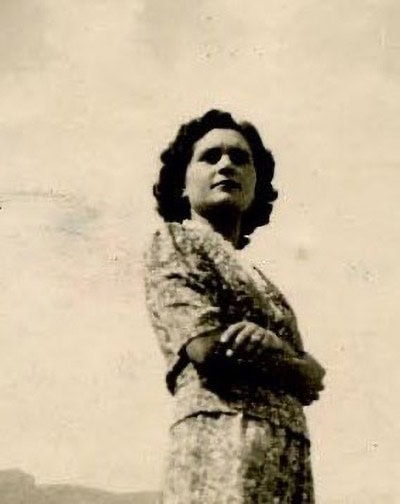
What I have come to understand is that her nos, her questioning, and her roadblocks were, in her mind, ways of protecting me. But when it came to her own life, her own circumstances, and her own survival, Elda’s internal story was very different.
I can do this.
I can get through this.
I have faith.
Her yes was for herself.
I had so many nos growing up that I became the yes in the ears of my clients. The freedom I fought for, I want them to know is theirs.
Whether they are walking into an interview, a funding pitch, a difficult conversation with their board, or a room full of peers who are not yet sure they agree, the practical preparation matters: the framework, the language, the opening that creates common ground.
But underneath all of it is the same perspective Elda carried with her every day in wartime Italy and throughout her life:
I believe I can get to the other side of this.
And in my experience as a coach, you probably can too.
When my clients look back, they almost always realize they did.
The challenge is that when we are facing uncertainty, a difficult conversation, a new opportunity, or a room that intimidates us, we often forget all the other times we’ve found our way through.
Stories remind us of what is possible.
What are you preparing to share, ask for, or propose?
Can you recall your own stories well enough to answer whatever comes at you?
If you missed last month’s reflection on Elda and “The Stories We Almost Missed,” you can read it here.
Maria Cristini is an executive coach for leaders and author of Two Feet In: Finding Clarity, Purpose, and Passion in Your Life and Career. Now available in print and on Kindle.