
My mother told them her whole life. I tuned them out. Now I need them.
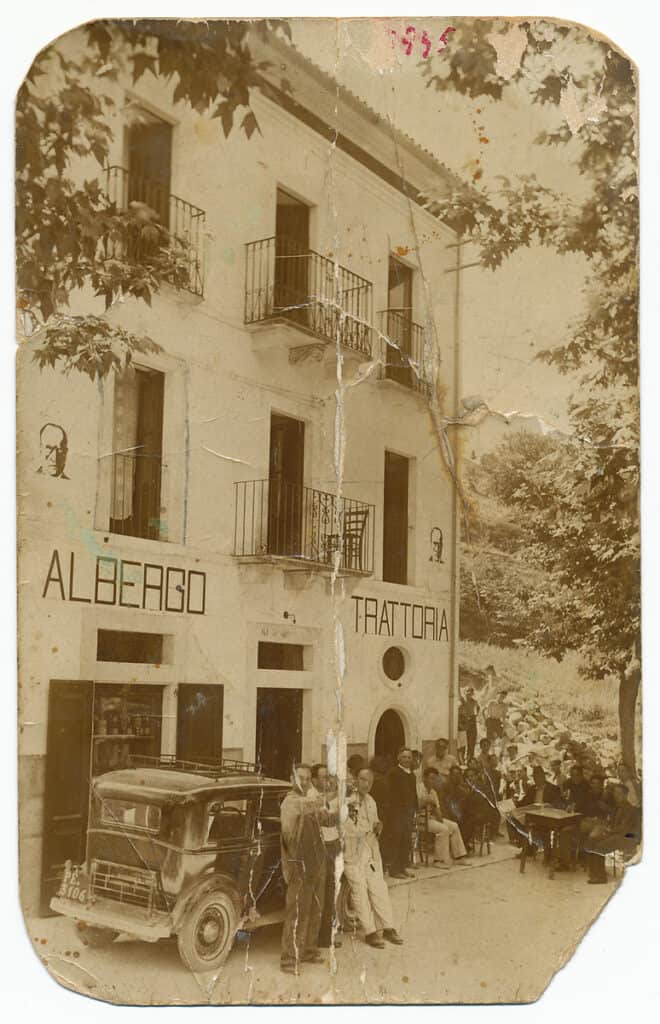
My mother Elda grew up in Caramanico Terme, a small mountain town in the Abruzzo region of Italy. Her family ran a pensione and general store. The kind of place where the community passed through, where rooms were offered to travelers, and where, during the war years, the risks of who you sheltered and who you turned away were very real.
She was born in 1920. Which means that between the ages of 19 and 25, while most young women were dancing and figuring out who they were, she was managing a household, advocating for her younger sisters, hiding food behind newly built walls, and helping to conceal people whose lives depended on not being found. Her father and brother were in the US for stretches of time, sending money back when they could. Her mother was warm and loving and not a natural businesswoman. So Elda took on responsibility beyond her age and ran things. She had been running things since she was twelve.
She told these stories her whole life. At the dinner table. On the phone. During visits. Over and over, the same stories: the hunger, the soldiers, the fear, the resourcefulness, the weight of responsibility that landed on her far too young.
And I, her only child, tuned them out.
I was young, and the stories felt heavy, and I couldn’t find myself in them. What did wartime Italy have to do with my life? I heard the words. I just didn’t let them in.
And somewhere between losing her and the uncertainty that has settled over so many of us as we watch the world shift in ways that feel unsteady and at times frightening, her stories came back to me.
Not as obligation, but as a resource.
The courage it took to hide people whose lives depended on it. The fear of being a household of women when German soldiers were sleeping down the hall. The creativity of trading whatever they had from hidden pockets in her apron to gain what was needed to keep the family healthy. The dignity she maintained through years of having very little, when meals were often: how many ways can onions and potatoes be tasty and filling.
I absorbed more than I knew. And now, when I need steadiness, one of her stories floats to memory, not just the circumstances since they are not mine, but what they carried: her resilience, resourcefulness, creativity, faith, courage, and willingness.
My older son published a cookbook of her recipes. The recipes nourish you, but the essence of the book is the storytelling. He understood something I was too close to see: that her stories were worth preserving. That they would matter to people who never met her.
When I met my husband’s mom for the first time, the first thing she shared with me were her stories of the same years that shaped who she had become. The choice to share those heavy stories was a bit surprising to me in my late 20s, but they have all stayed with me.
Someone in your own lineage probably had unfathomable challenges. And if you’re lucky, they told you about them, even if you weren’t ready to hear it yet.
I think about these stories when the world feels loud and the future hard to envision. When I remember that the very people who raised us lived through worse, I know: if my mom could do that, if my husband’s parents could survive what they experienced as Jews during the Holocaust, I can always find my own footing, courage, and hope.
The Story You Tell Yourself
Before we can tell our story to anyone else, we have to reckon with the one we’re telling ourselves.
Elda’s external circumstances were sometimes frightening and beyond her control. What wasn’t beyond her control was the story she carried internally: I can do this. I can get through this. I have faith. In her belief system, in herself, in the possibility of the other side of hard things. That internal story is what made everything else possible.
I see this in coaching more than anywhere else.
When a client comes to me preparing for their next version of themselves, an interview, a review, a pitch, a difficult conversation, or an expanded leadership role, the practical preparation matters. The stories they’ll tell, the framework they’ll use, the language they’ll choose. But underneath all of that is another layer: the story they’re telling themselves about whether they belong in that room at all.
I’m not sure I’m ready. Someone else is probably more qualified. What if they ask something I can’t answer? What if I get it and then can’t deliver?
These stories feel like facts. They rarely are.
Part of what coaching does is slow that narrative down long enough to examine it. Where did it come from? Is it true? Is it useful? And most importantly: what story would actually serve you better right now?
Not a false story. Not toxic positivity or performance confidence. A true story, just a different one. One that says: look at what you’ve already navigated. Look at what you know. Look at how the people who know you see you. Look at what you’ve built.
When clients find that story, really find it, not just say it, something shifts. They walk into the room differently. Not because the circumstances changed, but because they did.
The confidence that follows isn’t manufactured. It’s integrated. And from that place, they can show up authentically, in their best light, for whatever comes at them.
Elda didn’t have a coach. She had faith, necessity, and an internal story she refused to let go of. Most of us have more resources than she did and face far less. The question is whether we’re telling ourselves a story that opens the door, or one that keeps it closed.
What story about your life, work, or leadership have you been hesitating to tell?
And what might change if you told it?
Maria Cristini is an executive coach and author of Two Feet In: Finding Clarity, Purpose, and Passion in Your Life and Career.